Why Toasting Spices Changes Their Aroma
Why toasting spices changes their aroma, plus the cues that tell you when to stop and how to bring a clearer, warmer scent to your cooking.
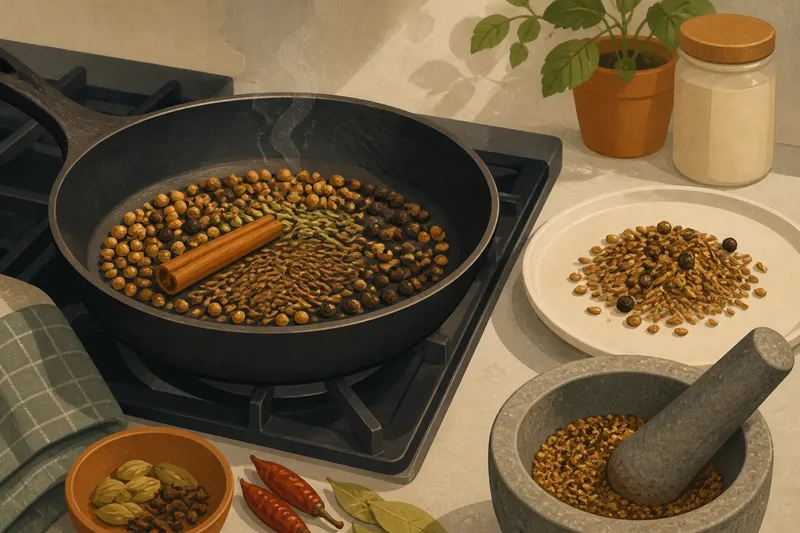
The common mistake with toasting spices is leaving them in the pan until a timer says they are done. Why toasting spices changes their aroma becomes clearer when you watch and smell: gentle heat can bring fragrant compounds forward, while continued heat can make them harsh. A pan gives useful cues, but no fixed time fits every spice, stove, or batch.
Dry heat brings different aromas forward
Whole spices hold aromatic compounds within their seeds, pods, bark, or buds. Warming them in a dry pan can make those compounds more noticeable. The result is not simply “more flavor”: the aroma may seem rounder, warmer, nuttier, or more resinous, depending on the spice.
Toasting warms a spice at its surface; it does not cook it all the way through. A whole cumin seed may smell earthy and savory after warming, while coriander seed can seem citrusy and floral. Black pepper may become woodier, and fennel can lean sweeter. These are possible shifts in impression, not promises about every jar.
Ground spices behave differently. Their greater exposed surface warms and loses aroma quickly, so a recipe that calls for dry-toasting whole spices is not permission to toast the ground version for the same time. If your recipe uses ground spice, follow its method rather than improvising a direct swap.
Pan, batch, and spice shape the cues
A heavy skillet holds heat steadily, while a thin pan can develop hot spots more readily. A small, dry stainless-steel or cast-iron pan works well for a modest amount because the spices are easy to move and observe. Keep them in a loose layer rather than a deep pile so changes are easier to notice.
Different spices warm at different rates. Small seeds may shift quickly; larger seeds, peppercorns, and pieces of cinnamon bark can take longer to give off a clear scent. Freshness and storage matter too. Spices kept sealed away from heat and light tend to retain more aroma than an old, exposed jar, but the pan cannot restore fragrance that has already faded.
Keep the heat gentle to moderate. If a few seeds begin smoking, the pan is too hot for this purpose; remove it from the burner and let it cool instead of waiting for a stronger aroma. Toasting should smell inviting, not acrid. Stir or shake the pan so one side of the spices does not stay against the hot surface.
Use sight and scent together
Smell is the most useful cue, but it is not the only one. Listen for faint crackling from seeds that contain a little moisture, and look for a slight deepening in color. Neither sound nor color is required: some spices change very little visually, and a quiet pan can still be warming them effectively.
As the aroma becomes distinct, lift the pan from the heat and smell again after a brief pause. The scent should be clearer and more expressive than it was in the jar, without a burnt edge. Because the pan retains heat, leaving spices inside after switching off the burner can carry them past the point you intended.
Transfer ready spices to a cool plate or bowl. A hot skillet is still cooking them, and a small pile can keep warming in its center. Let the spices cool before grinding or adding them to a dish; warm spices release aroma quickly, but handling them while very hot makes the process harder to judge.
Whole spices build aroma at different stages
Whole spices are useful when a dish begins with toasted aromatics. Warm them in a dry pan, then crush them in a mortar or grinder, or add them whole to a simmering pot when the recipe calls for it. Crushing after toasting makes the aroma more immediate because it exposes the seed’s interior.
Not every dish benefits from a separate toasting stage. A spice added to hot oil, butter, or another cooking liquid is not being dry-toasted; fat carries aroma differently and may brown the spice quickly. Follow the recipe’s sequence so the spice meets the ingredient and heat level it was designed for.
Say you are making lentils from a recipe that calls for whole cumin and coriander. Before heating, you notice that the cumin smells earthy and the coriander faintly citrusy. You stir both in a dry skillet until those scents become distinct, move them to a cool plate, let them cool, and crush them with a mortar and pestle. After adding them to the lentils as directed, the expected observable result is a clearer cumin-and-coriander aroma in the finished dish, while the lentils retain their own flavor. If the seeds begin to smoke instead, you take the pan off the heat and do not add that acrid batch.
How can you judge the aroma and choose a method?
How can I tell when whole spices are toasted?
Look for a more noticeable aroma and, sometimes, a slight change in color or a faint crackle. Stop when the scent becomes clear and pleasant; smoke or a sharp, burnt smell means the heat has gone too far.
Should I toast ground spices?
Ground spices heat and lose fragrance faster than whole ones, so they need a different approach. Use the method in your recipe; do not assume that a whole-spice cue or timing applies to powder.
Can spices toast in a pan with oil?
Spices warmed in oil are being bloomed in fat, not dry-toasted. Both methods can develop aroma, but they have different cues and recipe uses.
What should I do if a spice starts smoking?
Take the pan off the heat and let it cool; do not wait for the spice to smell stronger. If it smells acrid or tastes bitter, set that batch aside and start again with lower heat and closer attention.
Use a simple check to decide what to do next
- If the pan and spices are dry, then begin gently; if moisture or residue is present, then clean and dry the pan before proceeding.
- If the spices sit in a loose layer, then stir or shake them; if they form a deep pile, then spread them out so you can observe them evenly.
- If the aroma is still faint and there is no smoke, then continue stirring over gentle heat; if the scent is distinct and pleasant, then remove the pan from the burner.
- If the seeds have only a slight color change or remain visually similar, then use scent as your guide; if they darken sharply, then stop heating and check for a burnt smell.
- If faint crackling accompanies a pleasant aroma, then keep moving the spices and reassess; if the pan is quiet but the aroma is clear, then stop rather than waiting for sound.
- If smoke or an acrid smell appears, then remove the pan from heat and discard the burnt batch; if neither appears and the scent is pleasant, then transfer the spices to a cool plate.
- If the recipe calls for whole spices, then toast and crush them as directed; if it calls for ground spice, then follow its specified method rather than using the whole-spice approach.
Skip elaborate timing and trust a small batch
It is not worth memorizing a separate timer for every spice. Pan thickness, burner behavior, batch size, and spice condition all affect how quickly the aroma develops. A small batch is easier to move, observe, and stop than a crowded skillet full of spices.
For an unfamiliar spice, notice its smell before heating, warm a modest amount gently, and remove it when the aroma becomes distinct. Why toasting spices changes their aroma comes down to controlled heat and attention: the nose helps you recognize when the spice has opened, while smoke or an acrid edge tells you to stop.