Fresh, Dried or Frozen Herbs for a Weeknight Pot?
Fresh, dried or frozen herbs can each suit a weeknight pot; choose by when their flavor should enter, and keep the right texture for the dish.
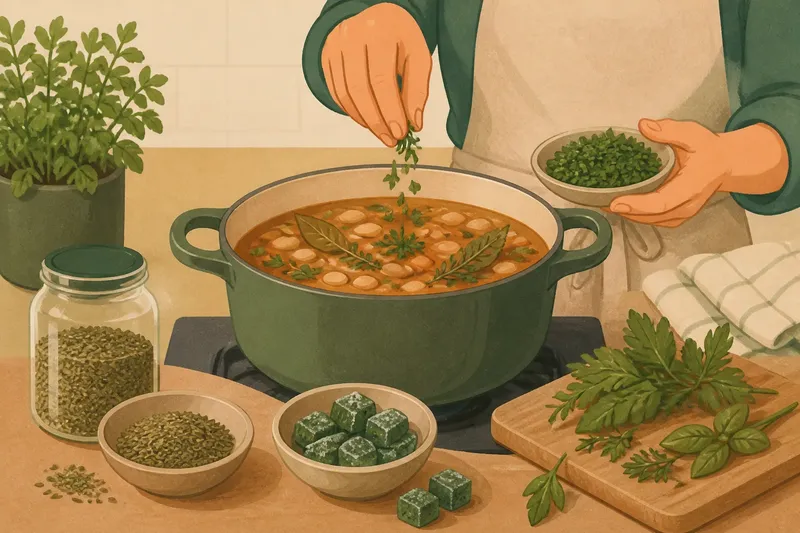
The common mistake with herbs in a weeknight pot is treating fresh, dried, and frozen as interchangeable versions of the same ingredient. That can leave delicate leaves muted, dried herbs harsh, or a finished dish dotted with limp stems. Choose instead by when the herb should add flavor: early in the simmer, during cooking, or just before serving.
That timing matters because herbs differ in both texture and how their flavor behaves in heat. Dried herbs are concentrated and need time to soften; fresh leaves often contribute their clearest aroma near the end; frozen herbs are already cut and can be convenient additions during cooking. The best choice depends on the dish’s texture and the job you want the herb to do.
Choose herbs by their role in the pot
Start by asking whether the herb should blend into the liquid or remain noticeable as a fresh accent. In a long-simmered bean stew, a background note can settle into the broth. In a quick soup or pan sauce, a bright finish may be more useful than a flavor that has been cooking from the start.
Then consider how much cooking time remains. A pot that will simmer for a while can give dried leaves time to soften and release flavor. If dinner is nearly ready, fresh leaves added at the finish can supply a distinct herbal aroma without asking them to withstand a long cook. Frozen herbs fall between those uses: they are handy to stir in while food cooks, though their texture usually won’t resemble crisp fresh leaves.
- Choose dried when you want a steady, blended herbal note in a dish that will cook for a while.
- Choose fresh when you want visible leaves, a lively aroma, or a last-minute garnish.
- Choose frozen when you want chopped herbs ready to add during cooking and a softer, integrated texture is fine.
These are starting points, not fixed rules. A fresh sprig can flavor a simmering liquid, and a pinch of dried herbs can season a quick dish. The question is what you want to notice when the food reaches the bowl.
Use dried herbs for flavor that needs time to settle
Dried herbs have lost much of their moisture, so they occupy less space and their flavor is concentrated. Their leaves may feel brittle, but they need contact with liquid and heat to soften and spread through a soup, sauce, or stew. Add them during cooking rather than scattering them over a finished plate, where dry fragments can taste dusty and remain tough.
Oregano, thyme, rosemary, and sage are common dried choices for cooked dishes. Their sturdy character can suit tomato sauce, lentils, braised vegetables, and brothy beans. A bay leaf is also used to flavor a simmering pot, but it is usually removed before serving rather than eaten as a leafy garnish.
For a balanced result, begin with a modest amount and taste after the herbs have cooked for a while. Dried leaves can become more noticeable as they hydrate and disperse, so adding another pinch too early may make the pot taste medicinal or overly woody. Crushing a few larger leaves between your fingers before adding them can help distribute them; it isn’t worth pulverizing every herb into dust.
Dried herbs are a poor fit when the dish depends on the fresh, green impression of chopped parsley or mint. Cooking can soften their flavor, but it does not restore the texture or bright aroma of a newly cut leaf. If a recipe’s flavor hinges on that fresh finish, use fresh herbs or leave the garnish out rather than expecting dried leaves to imitate it.
Add fresh herbs late when aroma and texture matter
Fresh herbs contain water and have a softer, more distinct leaf texture. Heat quickly changes that texture: tender leaves can wilt, darken, and lose some of their fragrance. For many weeknight soups, noodles, eggs, and quick sauces, stir tender herbs in once the pot is off the heat or close to serving.
Parsley, cilantro, basil, mint, and dill often work well as finishing herbs. Chop them shortly before adding if you want pieces distributed through the dish, or tear tender leaves when you want a less uniform look. A small handful on top can make a bowl smell herbal before the first bite; the same leaves cooked for a long time may become subdued.
Fresh herbs can also contribute flavor earlier. Tougher stems of thyme or rosemary may be added to a simmering liquid and removed later, while chopped leaves can go into the pot sooner if you want them blended rather than prominent. Separate tender leaves from coarse stems where the stem would be unpleasant to chew. The useful distinction is not simply “fresh goes last,” but whether you want the leaves to remain recognizable.
Rinse herbs when needed and dry them gently before chopping. Wet leaves can be slippery under a knife and may make a delicate garnish look limp. Keep a few clean, tender leaves aside if you want a fresh finish after adding chopped herbs to the pot.
Use frozen herbs when convenience matters more than leaf shape
Frozen herbs are generally chopped before freezing, so they are ready to portion into a dish. Once thawed, their leaves tend to be soft rather than crisp. That makes them useful in soup, stew, gravy, scrambled eggs, or a cooked sauce, where the herbs will mingle with other ingredients and a distinct fresh-leaf texture is not essential.
Add frozen herbs while the food is cooking, or stir them in near the end and give them time to warm through. A frozen clump can cool a small amount of food and distribute unevenly, so break off a portion that can be stirred throughout the pot. If the product is packed in oil, water, or a seasoned mixture, account for that liquid and read its ingredient label before adjusting the dish.
Frozen herbs are less suited to a garnish that should look crisp, or to a salad where intact leaves are part of the experience. Their practical advantage is having chopped herbs on hand, not reproducing the feel of freshly cut sprigs. If appearance matters, reserve fresh leaves for the plate and use frozen herbs in the cooking liquid.
Match the herb to the time left before serving
Time is a useful shortcut, but it should guide rather than dictate the choice. If the pot has a long simmer ahead, dried herbs can soften and mingle with the broth. If the food is almost ready, fresh leaves can bring aroma at the finish. If you want a ready-to-use addition for a dish that will still cook briefly, frozen herbs can fit without the work of washing and chopping a bunch.
Say you are making a pot of white beans with onion and broth, and the beans are already tender. If you want the herbs to disappear into the liquid, stir in a little dried thyme and let the pot simmer gently. If you want the bowl to smell fresh when served, finish it with chopped parsley. If the refrigerator has no parsley but the freezer holds chopped herbs, stir in a small portion and expect a softer, more blended result.
That example also shows why a direct swap can disappoint. Fresh herbs take up more space because they contain moisture, while dried leaves are concentrated; a spoonful of each does not deliver the same intensity. Frozen products vary in how finely they are chopped and whether they contain added ingredients. When changing forms, start conservatively, taste, and adjust rather than relying on a universal conversion.
Which herb form fits this cooking moment?
Can dried herbs be added at the end?
They can, but dry leaves often remain firm and their flavor may not have time to blend into the dish. If you want to use them late, crush them lightly and let the food cook briefly before serving, or choose fresh herbs for a more immediate finish.
Should fresh herbs go into a simmering soup?
They can, especially if you want their flavor to become part of the broth rather than remain a garnish. For a recognizable fresh aroma, keep some tender leaves aside and add them just before serving.
Can frozen herbs replace fresh herbs in every dish?
No: they are often a good fit for cooked foods, but thawed leaves are soft and may not suit a crisp garnish or salad. Use them where chopped herbs can blend into the dish, and choose fresh leaves when appearance and texture matter.
How should I adjust when a recipe names a different form?
Consider both the amount and the timing rather than swapping by volume alone. Begin with less of a more concentrated dried herb, give it time to cook, and taste before adding more; for product-specific directions, follow the package or recipe guidance.
Let the finished dish decide the herb form
Fresh, dried, and frozen herbs each make sense when their texture and timing suit the pot. Dried leaves are useful for a flavor that can settle during a simmer; fresh leaves suit an aromatic finish or a visible garnish; frozen herbs help when chopped leaves are wanted in a cooked dish without preparation. Choose the form for the moment it will enter and the texture you want to eat.
For a weeknight pot, the simplest decision is often to taste before serving and ask what is missing: depth in the broth, or a fresh herbal note at the surface. Add dried or frozen herbs to build the first; use fresh leaves for the second. Fresh, dried or frozen herbs are not a ranking from best to worst, but three ways to shape the same dish.