A Late-Summer Supper Built Around Tomatoes
Plan a late-summer tomato supper with a clear serving order, contrasting sides, and make-ahead choices that keep the meal relaxed and the tomatoes distinct.
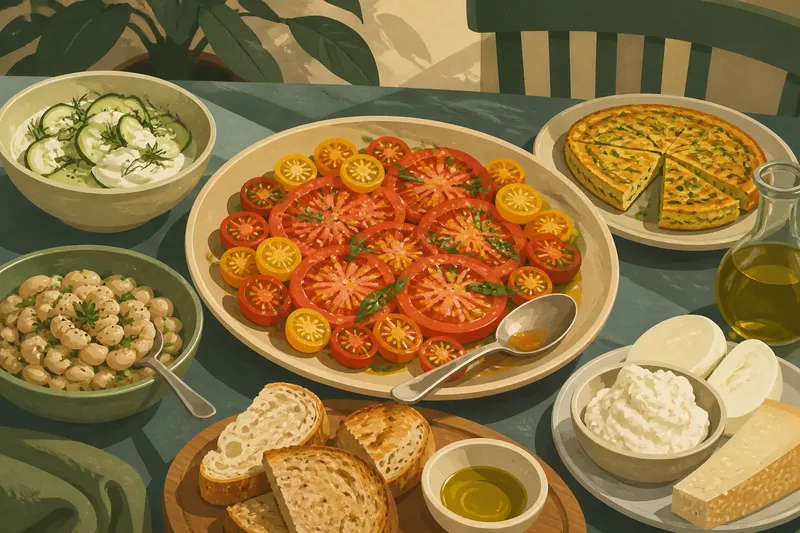
The most common mistake in planning a late-summer tomato supper is giving every dish the same soft, juicy character. The meal can feel monotonous even when the tomatoes are excellent. Build the menu around one fresh tomato platter, then add contrasts in texture, richness, and serving temperature.
Choose a menu with distinct jobs
Give each dish a purpose: the tomatoes bring freshness, a crisp side adds crunch, a substantial dish satisfies hunger, and bread or cheese offers an easy way to round out a plate. This approach keeps the supper tomato-centered without making every bite taste alike.
There is no need to seek out rare varieties or make every ingredient a different color. What matters is choosing foods that behave differently on the plate. Cucumbers stay cool and crisp; beans are tender and filling; toasted bread adds a dry, crunchy contrast.
Make one fresh tomato platter the focal point
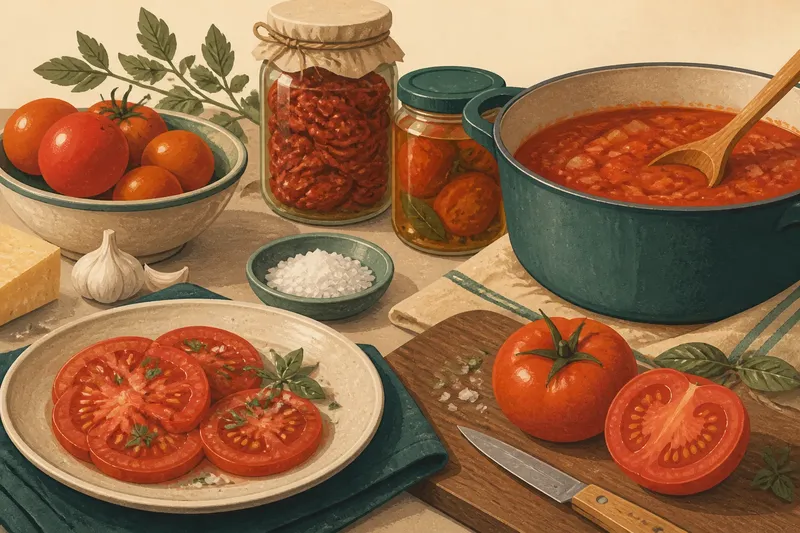
Choose ripe tomatoes that feel heavy for their size and yield slightly to gentle pressure. At home, keep them at room temperature and away from direct sun. Slice them shortly before serving so the pieces retain their shape, and catch their juices on a broad platter with a rim.
Arrange thick slices with halved cherry tomatoes, then season with salt and a little olive oil. Add torn basil and taste before adding red-wine vinegar or lemon juice; ripe tomatoes can already have plenty of brightness. Set bread nearby to catch the seasoned juices.
Say you have ripe beefsteak tomatoes and firm yellow cherry tomatoes. Slice the beefsteaks, halve the cherries, and arrange both on a broad plate with a rim. The platter then offers tender slices and firmer bursts, while its collected juices can be spooned over bread.
Use crisp, creamy, and filling sides for contrast
Choose one crisp side rather than several salads with overlapping ingredients. Thinly sliced cucumbers with dill and a light yogurt dressing work well; shaved fennel with lemon or simply dressed green beans are other options. Keep the side separate from the tomato platter until serving so its dressing does not mingle with tomato juices.
Add one substantial dish that can be prepared without competing for attention at the last minute. White beans with olive oil, parsley, and vinegar can be dressed ahead and tasted again before serving. A zucchini frittata can rest while you set out plates. Pick one, not both, if the meal already includes bread and cheese.
Cheese can add creaminess and salt without becoming another composed dish. Put out fresh mozzarella, ricotta, or a firm sheep’s-milk cheese separately, with a small knife or spoon. Guests can add it to their plates in the amount they prefer.
Plan the serving order around what holds well
Prepare the parts that tolerate waiting first. Set out the bread, cheese, and room-temperature substantial dish; wash and dry the tomatoes and serving greens; then slice and season the tomatoes shortly before eating. Bring the crisp side to the table when everyone is seated so it stays fresh.
Toast some bread and leave the rest soft if you want a choice of textures. Put out a serving spoon for beans or frittata and a shallow bowl for bread ends. Keep the table clear enough for shared plates; elaborate decorations are not worth the effort if they crowd the food or make serving awkward.
Make the timing and menu decisions that matter
Can the tomato platter be made in advance?
Wash the tomatoes and set out the platter earlier, but slice and season the fruit shortly before serving. That timing helps the pieces hold their shape and keeps the platter from filling with juice before dinner.
What makes a good make-ahead side?
Choose a dish that remains appealing at room temperature or needs only gentle reheating, such as dressed beans or a frittata. If it demands frequent attention just before the meal, choose a simpler alternative.
How do I keep a tomato supper from feeling repetitive?
Give the meal contrasting textures: pair the juicy platter with a crisp vegetable, a creamy or hearty element, and bread. Keep tomatoes in one central dish rather than adding them to every side.
What should I serve with very juicy tomatoes?
Use a broad platter with a rim and put bread close by to catch the juices. If the platter collects more liquid than guests want on their plates, spoon some into a small bowl for dipping.
Adjust the menu to the tomatoes in front of you
- If the tomatoes are soft but still hold their shape, slice them for the platter; if they collapse under gentle handling, cut them into rough pieces and serve them in a bowl instead.
- If the tomatoes taste bright and sharp, leave out the vinegar or lemon; if they taste mild, add a small splash and taste again before serving.
- If the platter releases little juice, set out olive oil and bread as planned; if it releases plenty, use a rimmed platter and offer a spoon for the liquid.
- If the crisp side is dressed with yogurt, serve it in a separate bowl; if it is dressed lightly with oil and vinegar, still keep it apart until guests are ready to eat.
- If beans are already on the menu, choose beans as the substantial dish and skip another filling side; if not, add dressed white beans or a frittata, but avoid making both unless the group needs a fuller meal.
- If the bread is soft, toast some slices for crunch; if it is already crusty, serve it as it is and spend the time on slicing the tomatoes neatly.
For a late-summer tomato supper, the useful final check is balance, not abundance: one fresh centerpiece, one crisp contrast, and one satisfying element are usually enough. Taste the tomatoes before the final seasoning, then leave room for the meal to unfold without another dish demanding attention.